Air Duct Cleaning Services in Littleton, CO
Whole-system cleaning of supply and return ducts, trunk lines, registers, and the furnace — inspection first, negative air, and camera proof of the work.
- Air duct, dryer vent, furnace, commercial, coil & duct repair
- Littleton, Centennial, Englewood & nearby areas
- Assessment first, then a clear plan
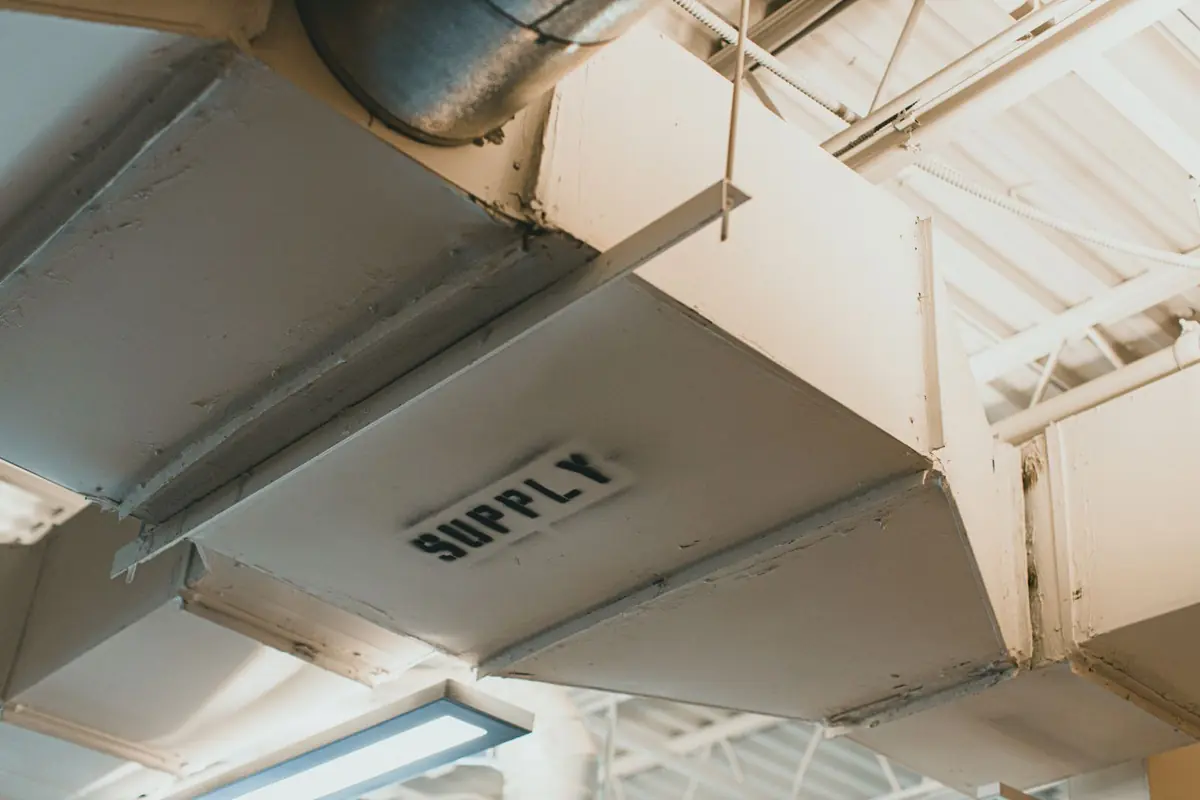
What this page covers: Whole-system air duct cleaning in Littleton, CO — supply and return ducts, trunk lines, registers, and the furnace. This page defines what a proper cleaning includes, how the process works, how often Colorado homes need it, what affects cost (factors only, no prices), and how to tell a real cleaning from a bait offer.
Published 2026-11-14 · Last updated 2026-11-14
What is whole-system air duct cleaning in Littleton, CO?
Whole-system air duct cleaning covers supply and return ducts, trunk lines, registers, and the plenum — not just the visible covers. Air vent cleaning covers the register in the room; duct cleaning covers the connected ductwork behind it. Cleaning only the covers leaves the system untouched, which is the most common shortcut in this trade.
The duct system of a home has three parts that matter here. Supply ducts carry conditioned air to each room. Return ducts carry room air back. Trunk lines are the large main runs that feed the branches, and the plenum is the box at the air handler where the trunk lines connect. A whole-system cleaning touches all of them, plus the furnace. A job that touches only the registers is vent cleaning, and it should be sold as vent cleaning — not as duct cleaning.
The National Air Duct Cleaners Association (NADCA) publishes the ACR Standard for assessment, cleaning, and restoration of HVAC systems. NADCA also certifies companies and technicians. This site claims no NADCA certification for any provider — the standard is referenced so callers know what to ask about, not as a credential.
What the cleaning covers
- Supply ducts and return ducts, vent by vent
- Trunk lines and the plenum at the air handler
- Registers and return grilles, removed and cleaned
- Furnace blower compartment, blower wheel, and coil area
- Access points sealed after the job, and before-and-after camera footage as proof
How does air duct cleaning work?
A high-powered vacuum connects to the trunk lines near the air handler, the system is held under negative air, and compressed-air and brush tools break debris loose vent by vent. Dislodged debris is pulled to the vacuum rather than blown into the living space. The furnace is cleaned as part of the same job, and access points are sealed after.
The method has a name in the trade: source removal under negative air. The vacuum is usually a truck-mounted unit outside the home, connected by a large hose to the furnace or blower compartment. Agitation tools — compressed-air whips and rotating brushes, sometimes called a RotoBrush — travel through the ducts loosening residue from the walls. Every register outlet is cleaned, and the furnace blower fan, heat exchanger area, and evaporator coil are finished last.
- InspectA visual or camera inspection of the ducts and the furnace first, with a plan for what needs cleaning and what does not.
- Set under negative airThe vacuum connects to the trunk lines and the system is held under vacuum for the whole job.
- Agitate vent by ventCompressed-air and rotating-brush tools break debris loose from duct walls, working back toward the vacuum.
- Clean the furnaceBlower compartment, blower wheel, and coil area — so a dirty furnace does not re-contaminate clean ducts.
- Seal and verifyAccess points are sealed after the job, and before-and-after camera footage shows the inside of the ducts.
Two details separate a real job from a performance. First, the vacuum must be connected to the trunk lines — a crew that blows compressed air into the ducts without the vacuum attached fills the home with dust. Second, the furnace must be part of the job. Dirty air passes through the furnace; cleaning the ducts and leaving a dirty blower means the first heating cycle pushes the same dust back through clean ducts.
What are the signs air ducts need cleaning?
The clearest signs are dust or debris visibly blowing out of the supply registers, a musty smell when the system runs, and uneven airflow between rooms. A dirty register alone is not proof — dust on a grille does not establish heavy contamination inside the ducts. An inspection, not a glance at a vent cover, decides whether cleaning is warranted.
- Visible dust or debris puffing out of registers when the system starts
- A musty smell that gets stronger when the heat or air conditioning turns on
- Uneven airflow — one room freezing while another is boiling, or weak airflow in some rooms
- Dust returning a day after the house was cleaned, or dust on registers that keeps coming back
- A recent renovation that put drywall or construction dust in the ducts
- A pest problem, or a home that has never had its ducts cleaned in decades
- Dark spots on or around vent covers, or moisture and condensation on vents
Three signs together point at mold in the ducts: a musty smell stronger when the system runs, dark spots on or around vent covers, and moisture or condensation on vents or ductwork, sometimes with rust on the metal. Those are general guidance, not a diagnosis — and the moisture source must be fixed first, because cleaning mold without fixing moisture means it returns. The FAQ page covers the mold question in full.
How often should air ducts be cleaned in Colorado?
General guidance is every 3 to 5 years for the average home, sooner with pets, a recent remodel, or wildfire smoke exposure. Colorado's dry air keeps fine dust airborne longer, and static buildup circulates dust faster. Even so, the EPA position stands: clean only as needed, when an inspection shows buildup worth removing.
The triggers are the same ones listed on the home page: pets, allergies or respiratory symptoms that track with the system running, a remodel, a pest problem, visible mold, debris from the registers, or a system never cleaned in decades. Wildfire smoke is the Colorado-specific trigger — fine smoke particulate settles in ductwork during a heavy smoke week, and the filter loads faster. After a smoke week, check the filter more often.
Does air duct cleaning help allergies or lower energy bills?
Cleaning has never been shown to actually prevent health problems, according to the EPA, so no allergy relief is promised here. The EPA also notes there is little evidence that cleaning ducts alone improves energy efficiency. Cleaning removes what is inside the ducts; it does not change how the system is built or how it is maintained.
That honesty is the point. Ads in this trade promise allergen reduction and energy savings as facts. The EPA guidance says otherwise, and this site follows the EPA guidance. What cleaning does, when it is warranted, is remove accumulated dust, debris, pet hair, and contamination from the duct system — and that is a maintenance job with a visible result, not a health treatment. Filters matter more for day-to-day air: check the filter every month in heating season and replace it every 1 to 3 months, using the highest MERV rating the system can support.
Can air duct cleaning remove wildfire smoke smell?
Cleaning removes settled smoke particulate from the ductwork, which can reduce the smell that returns each time the system runs. Smoke particles can persist inside ducts after a wildfire event and re-release odour. Smell held in furniture, fabrics, and walls needs more than duct cleaning, and the filter should be checked more often after a heavy smoke week.
The EPA guidance on wildfire smoke is practical: portable air cleaners and high-efficiency HVAC filters can remove smoke particles, and a clean room helps during a smoke event. After the smoke clears, the ducts are cleaned only as needed — for example, if ducts are clogged with excessive dust or debris, or particles are actually released from the supply registers. That is the same EPA test as for any cleaning.
When is cleaning warranted — and when is it mold?
Cleaning is warranted in the three EPA cases: substantial visible mold in hard-surface ducts, vermin infestation, or ducts clogged with excessive dust and debris. A musty smell, dark spots near vents, and moisture on ductwork are the three warning signs. The moisture source must be fixed first, or the problem returns after cleaning.
Mold in ducts is a boundary question, not a cleaning question alone. Substantial visible mold on hard-surface ducts is an EPA-warranted case. But mold growth is a moisture problem first: a leaking drain pan, condensation on ductwork, or a damp crawlspace. Cleaning the mold without fixing the moisture is a repeat job. Sanitizing — an antimicrobial treatment applied after mechanical cleaning — is a separate step with a reason, such as smoke smell or microbial growth at a corrected source. Fogging alone is not cleaning, and no sanitizer replaces removing the debris first.
What is air duct sanitizing, and does it replace cleaning?
Sanitizing is an antimicrobial treatment applied after mechanical cleaning, only with a reason — it never replaces cleaning. Fogging a dirty duct coats the debris instead of removing it. Cleaning comes first, sanitizing second, and only when there is a reason such as smoke smell or microbial growth at a source that has already been corrected.
What affects the cost of air duct cleaning in Littleton?
System size, the number of vents and systems, how easy the ductwork is to reach, the condition of the ducts, and any add-ons such as dryer vent cleaning or sanitizing. No price is printed anywhere on this site. A written quote follows an assessment of the specific home.
The bait-offer pattern: a whole-house special advertised at a very low price that cannot cover a real cleaning, followed by an upsell once the technician is inside — mold found in minutes, sanitizing, sealant. The real scope appears only after the crew is in the hallway. Getting written quotes from at least three providers, and asking what is included before booking, is the protection against it.
What a written quote should show: whether the furnace is included or an extra, what products are used, who will actually be in the home, and what proof of the work is provided. Those are the same five questions in the FAQ below. The EPA advice is to get written quotes from at least three providers before choosing.
How do I know the cleaning was actually done?
Before-and-after camera footage of the inside of the ducts is the receipt for the work. If a provider cannot show the ducts before and after, there is no way to know the work was done. Access points should be sealed after the job, and the filter checked.
Duct repair and sealing
Cleaning and sealing are different jobs. Cleaning removes debris; sealing fixes leaks at joints and damaged sections with mastic or tape, and addresses energy loss and uneven rooms. A home with crushed or disconnected flex duct, or ductwork damaged in the attic or crawlspace, needs repair first — cleaning a broken duct is wasted work. See the dedicated duct repair and sealing page.
Commercial air duct cleaning
Offices, restaurants, schools, and retail spaces have the same duct systems at a larger scale, and the same test applies: inspection first, whole-system cleaning under negative air, and proof of the work. Commercial work is usually scheduled outside business hours. See the dedicated commercial air duct cleaning page.
AC coil cleaning
The evaporator coil inside and the condenser coil outside are part of the same system. Signs of a dirty evaporator coil are weak cooling, a coil that freezes, a drain line that keeps clogging, a blower that strains, and higher running time. Outdoor condenser cleaning — brush, coil cleaner, and a gentle rinse — is a common homeowner job; indoor evaporator work, and anything involving refrigerant, is professional-only. See the dedicated AC coil cleaning page.
Split-level and tri-level homes
Split-level and tri-level homes in Littleton have longer, more branched duct runs, and the upper level often gets the weakest airflow. The same whole-system method applies, with attention to the long runs and the returns on each level. Uneven rooms in these homes are usually an airflow and duct problem, not a furnace problem.
Mobile homes, insulation removal, and other add-ons
Mobile home duct systems are smaller and often run under the floor, with tighter access — the same inspection-first method applies. Vacuum insulation removal, in-duct UV lights, and high-MERV filter upgrades are separate add-ons, not part of a standard cleaning, and attic or crawlspace duct inspection is part of the assessment when the ductwork runs there. Home-sale cleanings — inspection-response cleanings where an inspection flagged the ducts — smoker resets, and re-cleans after a bad job are all handled as assessment-first work: the inspection decides the scope.
Ken Caryl
Ken Caryl Ranch sits in the foothills west of Littleton, and its homes face the same dry-climate dust and wildfire smoke as the rest of the area, with valley-funnelled smoke and red sandstone dust as local factors. Two competitors already run dedicated Ken Caryl pages, so Ken Caryl is covered here as a section rather than a separate page. ZIP codes 80127, 80128, and 80465 cover the Ken Caryl area.
Frequently asked questions — air duct cleaning
Is air duct cleaning worth it, or is it a scam?
Both sides are partly right. Cleaning is worth it when there is something specific to remove — renovation dust, pet hair, a past pest problem, visible mold, vermin, or debris blowing out of registers. It is not worth it as routine maintenance on a new, well-sealed system with regular filter changes. The EPA: cleaning has never been shown to actually prevent health problems, and is recommended only as needed.
How often should I clean my air ducts in Colorado?
General guidance from NADCA is every 3 to 5 years for the average home, sooner with pets, a recent remodel, or wildfire smoke exposure. The EPA caveat matters most: condition beats the calendar. An inspection shows whether there is buildup worth removing; a date on a calendar does not.
What does a proper air duct cleaning include?
Inspection first, then the whole system under negative air: supply and return ducts, trunk lines, registers, the plenum, and the furnace — blower compartment, blower wheel, and coil area. Agitation tools break debris loose vent by vent, access points are sealed after, and before-and-after camera footage is the receipt.
What is the difference between air vent cleaning and air duct cleaning?
Vent cleaning covers the visible register or grille in the room. Duct cleaning covers the connected ductwork behind it — the runs, trunk lines, and plenum that carry air through the home. Cleaning only the covers leaves the system untouched.
Can air duct cleaning remove wildfire smoke smell?
Cleaning removes settled smoke particulate from the ductwork, which can reduce the smell that returns each time the system runs. Smell held in furniture, fabrics, and walls needs more than duct cleaning. After a heavy smoke week, check the filter more often and change it when it is loaded.
What should I ask before booking an air duct cleaning?
Is the furnace included or an upcharge? What products are used? Who will actually be in the home? How many jobs are done per day? And what proof of the work is provided — before-and-after camera footage? A provider that cannot answer those five questions clearly is a warning sign.
More questions are answered on the FAQ page, including dryer vent and furnace questions. For dryer vents, see dryer vent cleaning; for furnaces, see furnace cleaning.
Start With an Assessment
Call and describe what was noticed, where it was noticed, and when it was first noticed. A local provider assesses first, then lays out the next steps clearly — no guesswork, no pressure.